
How Foodhack turned manual startup dealmaking into a platform that scaled and closed real deals.
Foodhack had a community of investors and a steady pipeline of vetted FoodTech startups. Every deal still ran over email and phone calls, one introduction at a time. I designed the product that turned that hand-run market into something the team could scale.
The project in ten seconds.
Where Foodhack was when I came in.
Foodhack is a FoodTech media and community business, part of HackGroup SA alongside ClimateHack, HackSummit, and KAPITAL. Its weekly newsletter, trend reports, meetups, and conferences had earned the trust of founders, investors, and operators across food innovation.
That trust produced a side effect. Investors in the community wanted to back the startups Foodhack wrote about and put on stage. Camille Bossel, co-founder and COO, reached out to me to turn that demand into a real product.
A market that only worked by hand.
Before the platform, every deal was run manually. Foodhack sourced and audited startups, then connected investors to founders through direct introductions and calls.
It worked at low volume and hit two hard limits. It could not grow past the team’s personal bandwidth, and no one had a single place to see where each deal stood or what was blocking it.
Two groups felt this most: the Foodhack team, who carried every deal in their heads, and investors, who would discover an opportunity at an event and then lose momentum waiting on follow-up.
One journey defined success: discover a deal, commit funds, without leaving the product.
For investors
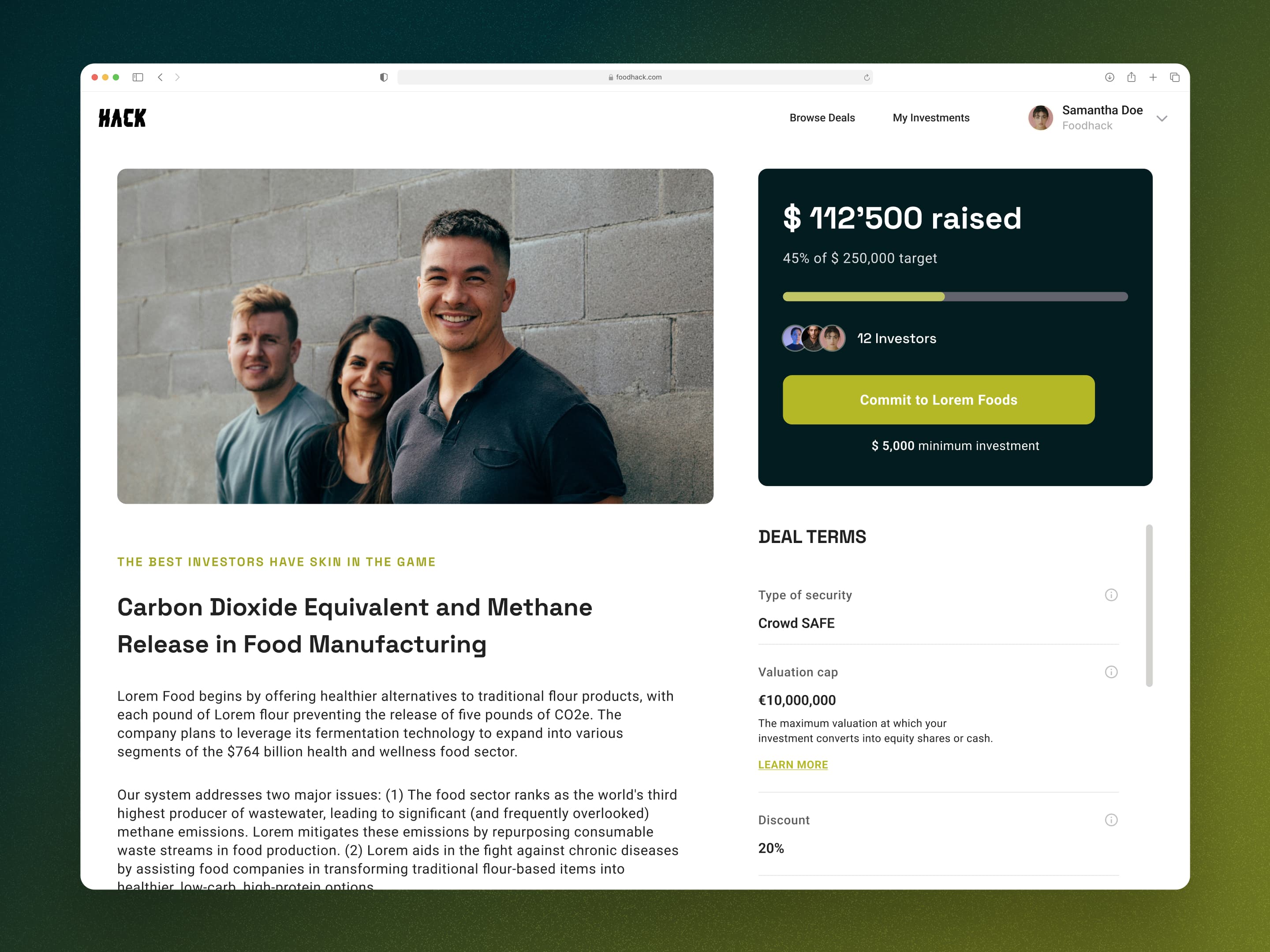
Browse the open deals Foodhack had vetted, read a full deal page covering activity, target raise, and supporting documents, then audit the data and commit on a secure flow.
For startups
Reach Foodhack’s vetted investor community through a single deal page that presents the raise, the traction, and the supporting documents, and receive commitments through one structured flow.
For Foodhack Team
Add new startups quickly and open them to investors, and track every investment across the portfolio in one place.
A small team, an audience that already trusted the brand.
The team was four people: a COO supporting product strategy, two developers, and me. That shaped the plan more than anything else. We could not build everything at once, so polished secondary surfaces were deliberately left for later.
Acquisition was both a constraint and an advantage. Almost every user would come from Foodhack’s own community and events, so the product had to convert an audience that already trusted the brand rather than win cold attention.
What I owned versus what the team owned.
I owned product strategy and design end to end: the user journeys and go-to-market thinking, every interface in the platform, the landing page, and a design system documented in Figma.
I worked daily with Dario Regazzoni, the platform developer, who implemented the system in Storybook, and with Camille on strategy and prioritization. Research, testing, and the design system were mine to drive. Engineering and final business calls were shared.
Find the smallest real market, then learn from people using it.
We mapped the investor journey with the team, prioritized the work in Trello, and ran continuous validation with real Foodhack investors and admins.
Collaborative workshops with founders, stakeholders, and developers kept design and engineering moving together instead of in sequence. Every round of usability testing fed the next set of screens.
Three calls that shaped the product.
01
Build the money path before anything else
The platform could have started with profiles, community, or a polished sign-up. We built the three screens that carry the transaction instead: browsing deals, the deal page, and the commitment step. That core flow was drafted in roughly two weeks and shipped soon after, so we learned from real investors before spending time on anything peripheral.
02
Keep onboarding human on purpose
Automating sign-up early would have saved the team effort. We chose the opposite and invited investors one by one. The cost was manual work. The return was a direct line to every early user and precise feedback on what a deal page actually needed to show.
03
Give admins a deal cockpit
Investor-facing screens are the obvious work. The decision that mattered just as much was an admin view where the team could see where each investor stood in each deal, message them, and surface blockers. For a four-person operation, this is what made closing deals at volume possible.
What shipped, and the problem each piece solved.
01
Landing page
Built to convert Foodhack’s existing, already-trusting community rather than win cold attention.
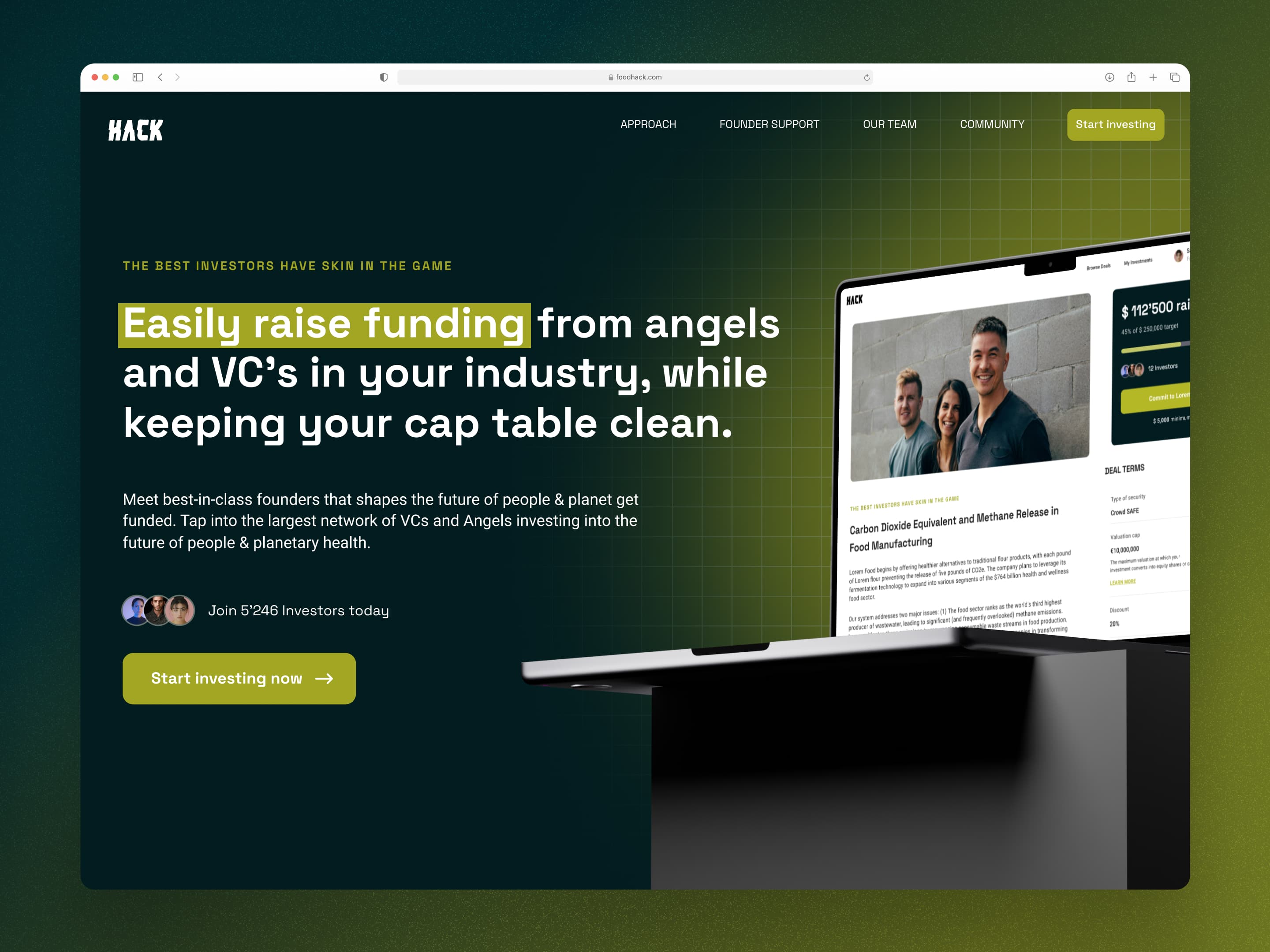
The landing page leads with a live deal rather than a generic pitch, converting an audience that already trusted the brand.
02
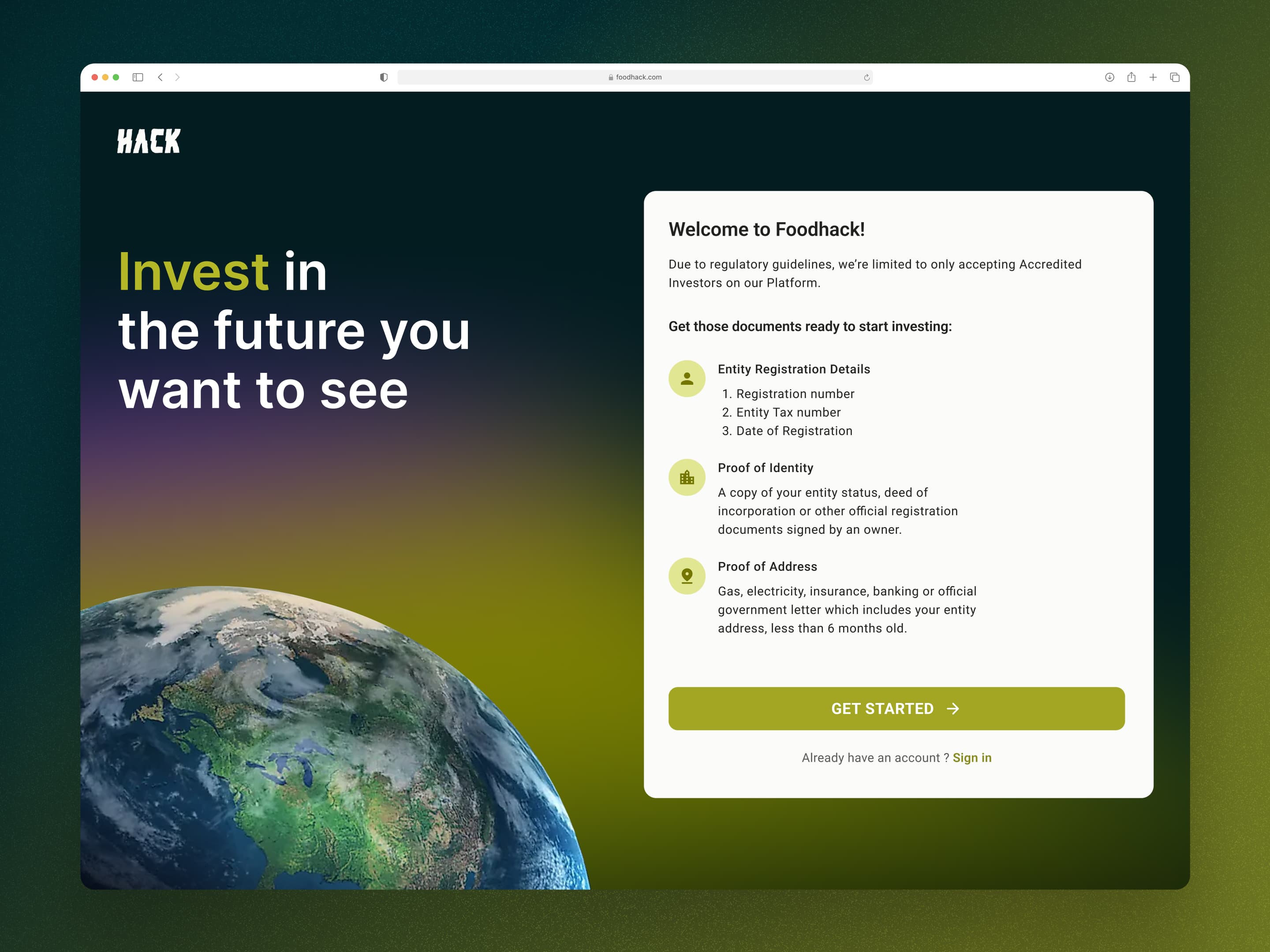
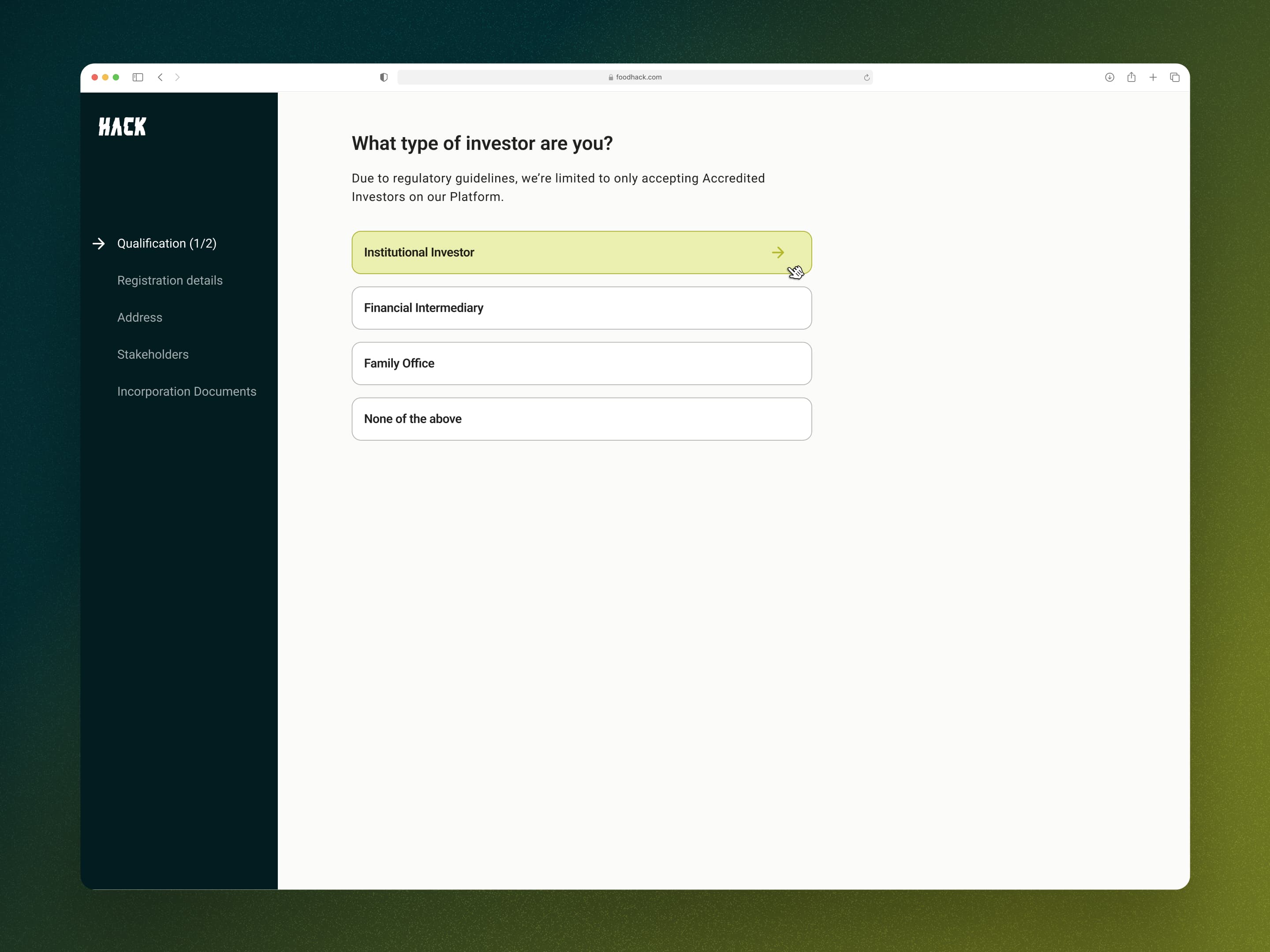
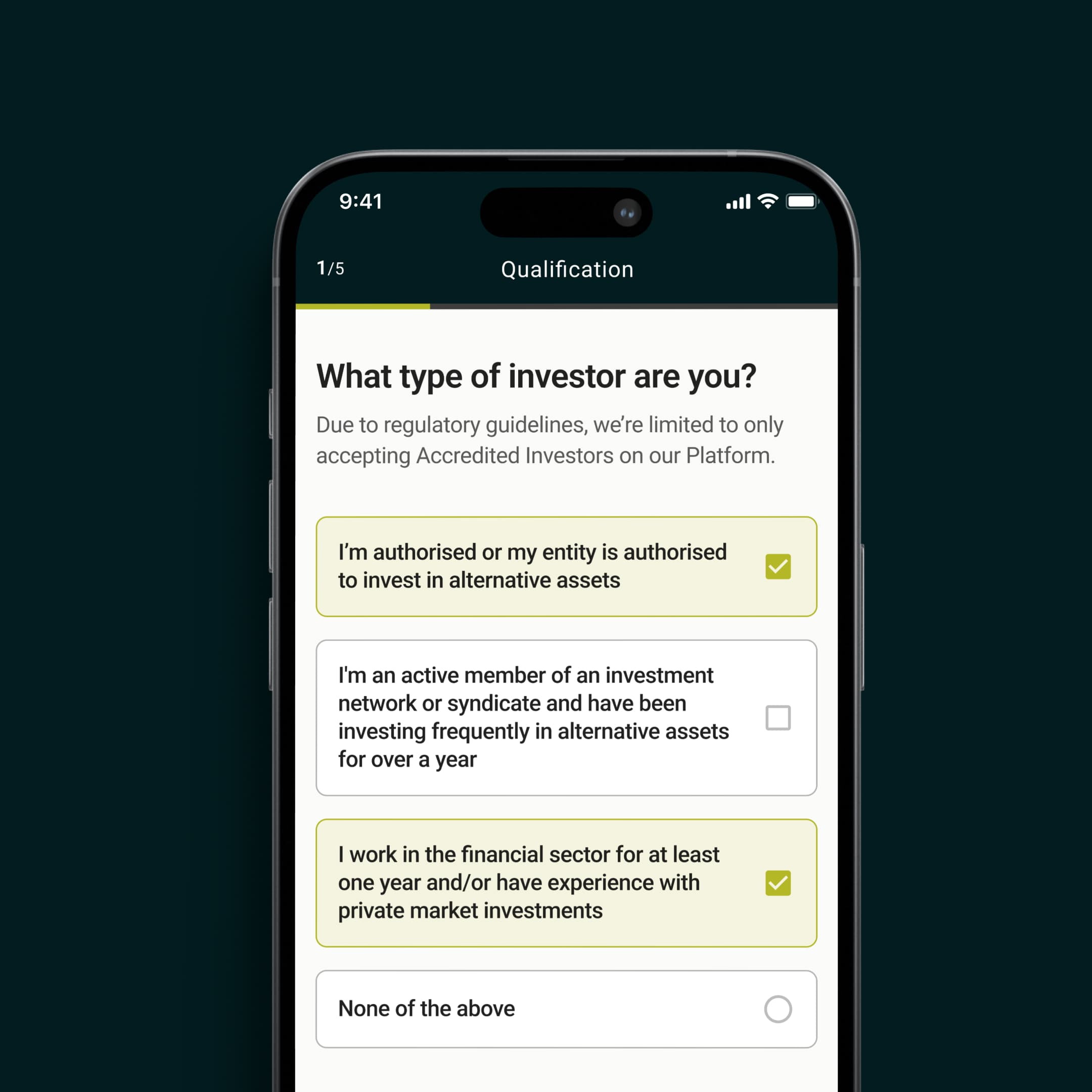
Investor onboarding
A regulated KYC step turned into something legible, broken into clear stages.
03
Investment flow
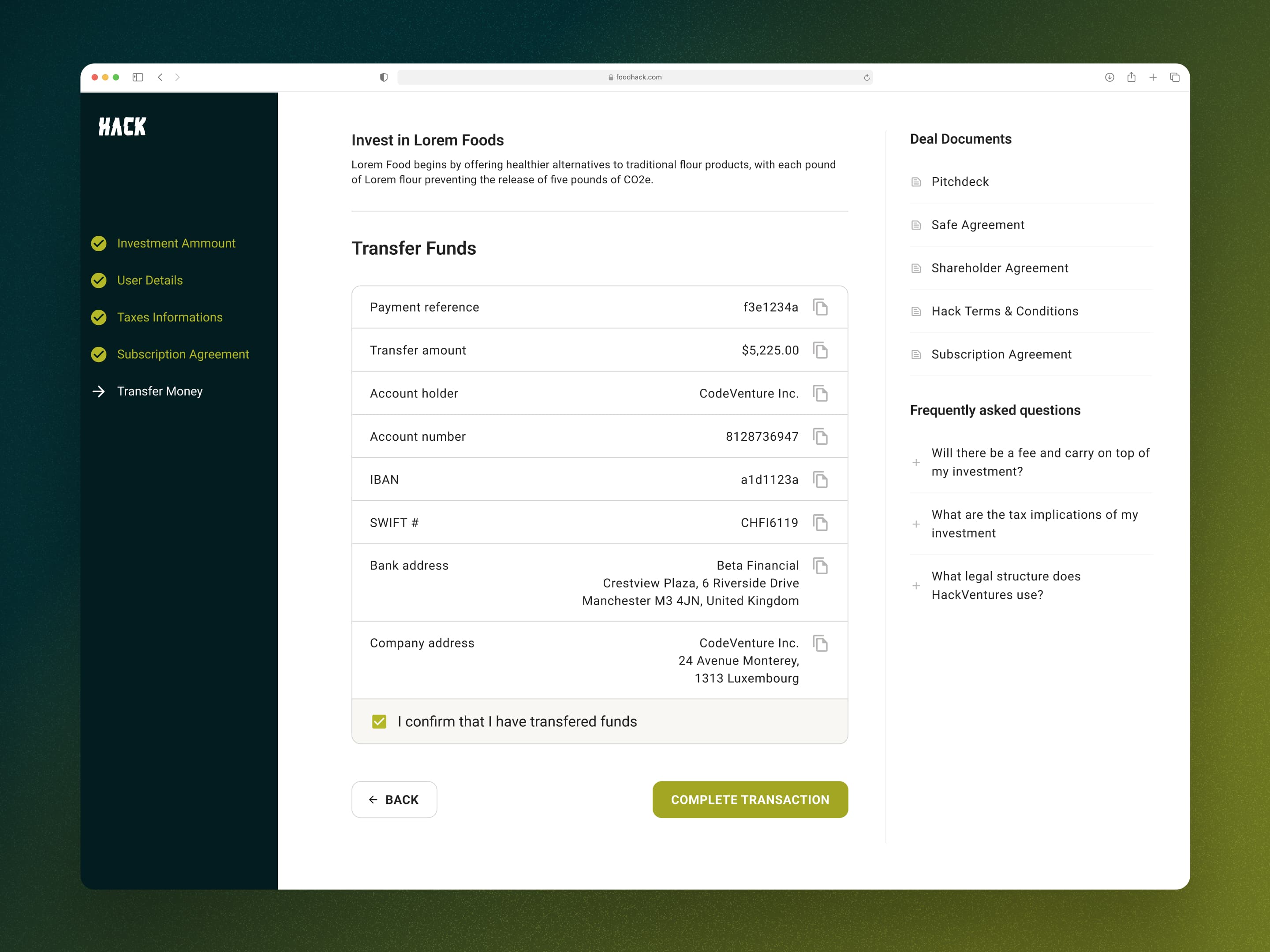
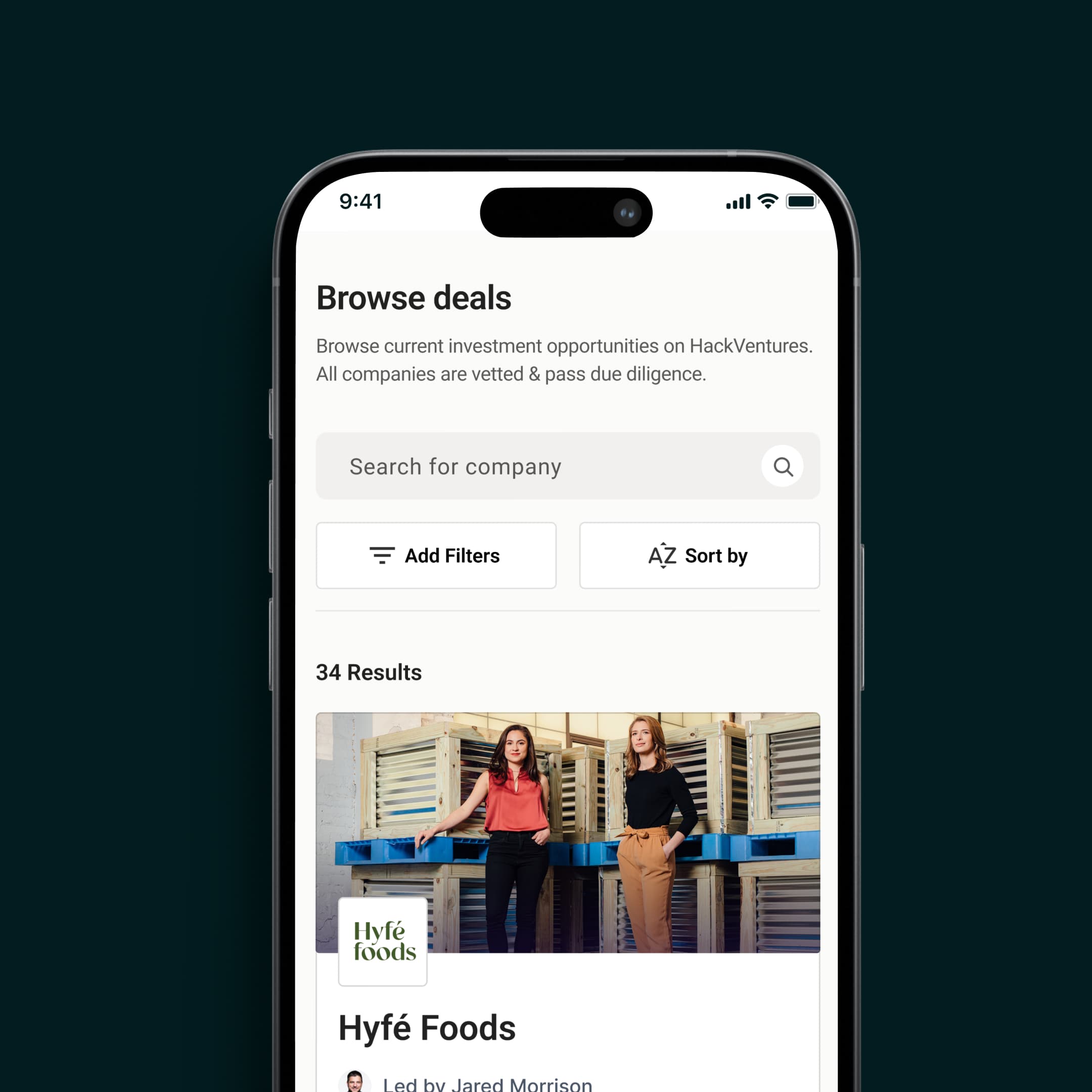
Browse, deal page, and commit. The core path that removed the manual back-and-forth between investors and the team.
04
Admin console
One view for the team to track every deal, see where each investor stood, and close.
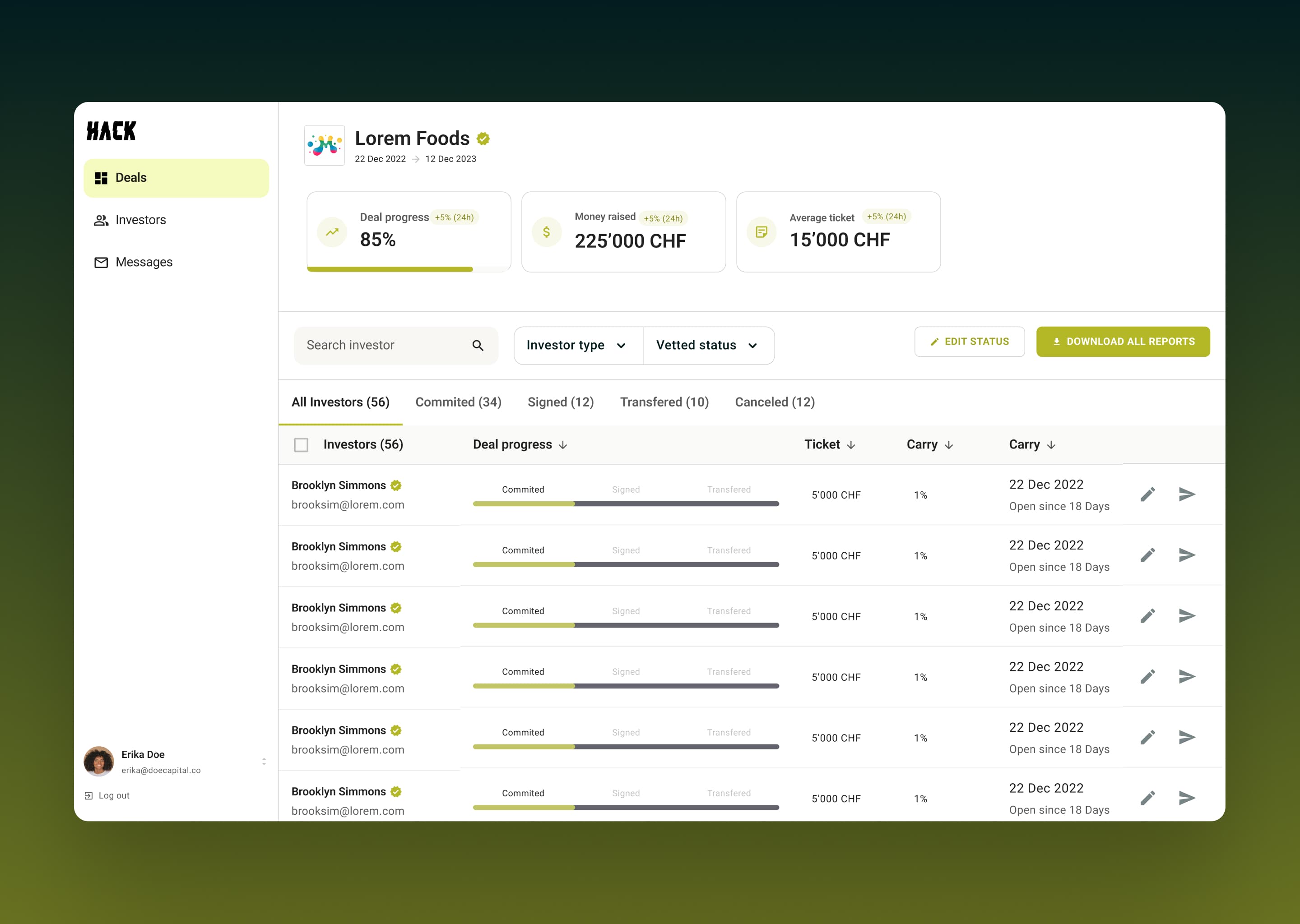
The admin dashboard gives the team one place to track every deal and see where each investor stands.
05
Design system
A Figma design system implemented in Storybook, so two developers could keep shipping without redrawing the basics.
What changed because of the work.
What I would repeat and what I would change.
I would repeat shipping the transaction path first and treating manual onboarding as a research tool rather than a gap. I would change one thing: set an explicit trigger for when manual onboarding ends, so the insight loop does not quietly become the bottleneck as volume grows. The lasting lesson is that with a tiny team, the highest-leverage design work is often the internal admin surface nobody sees.
The work outlived the engagement.
Foodhack still runs today as a media and community brand. The investment platform evolved into a standalone product, KAPITAL, described as the backoffice behind private market transactions.
KAPITAL structures, issues, and reports on private market investments for founders, VCs, syndicates, family offices, and asset managers. It operates as KAPITAL Luxembourg Sàrl out of Luxembourg and Lausanne, and Camille Bossel is still involved.